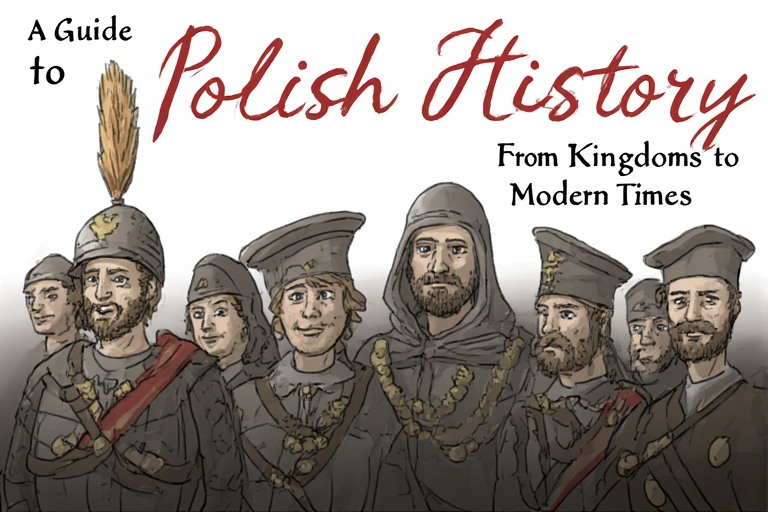
Poland is one of Europe’s most historically rich and resilient nations, with a story shaped by powerful kingdoms, cultural flourishing, partitions, wars, and a modern democratic rebirth. From medieval beginnings to its present role in the European Union, Poland’s history reflects both struggle and strength.
The Origins of the Polish State
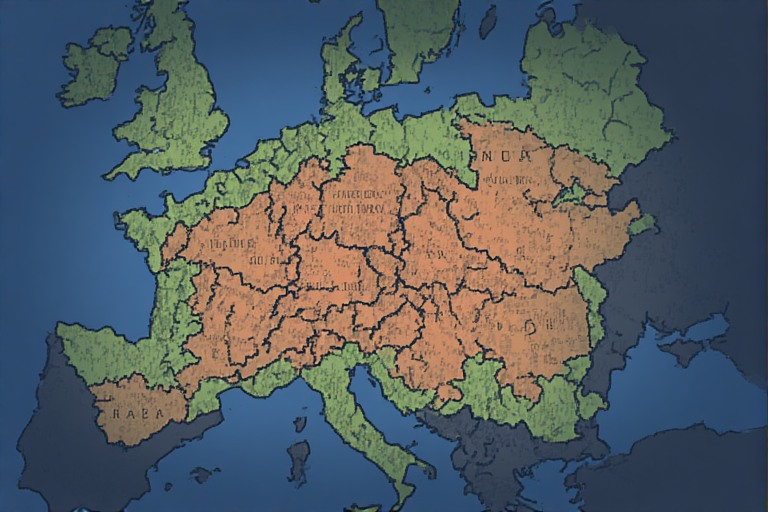
The foundations of Poland date back to the 10th century under the Piast dynasty. The baptism of Duke Mieszko I in 966 is widely considered the symbolic birth of the Polish state, as it aligned the country with Western Christianity and European political structures.
During this early period, Poland developed as a centralized monarchy with strong ties to neighboring regions. The capital shifted over time, eventually becoming associated with cities like Kraków, which would later become a cultural heart of the nation.
The Golden Age: Polish-Lithuanian Commonwealth
One of the most significant chapters in Polish history began in 1569 with the formation of the Polish-Lithuanian Commonwealth, a political union between Poland and Lithuania. It became one of the largest and most powerful states in Europe at the time.
This era was known for its unique political system, the “Nobles’ Democracy,” which gave significant power to the nobility through an elected monarchy. The Commonwealth was also notable for religious tolerance compared to much of Europe during the same period.
However, internal political instability and external pressures eventually weakened the state, setting the stage for its decline.
The Partitions of Poland
In the late 18th century, Poland faced one of the most tragic periods in its history. Between 1772 and 1795, the country was partitioned three times by Russia, Prussia, and Austria. By the end of the final partition, Poland ceased to exist as an independent state.
Despite this, Polish identity and culture remained strong. Poles continued to preserve their language, traditions, and national consciousness even without a sovereign state.
Rebirth After World War I
After 123 years of partition, Poland regained independence in 1918 following World War I. This marked the creation of the Second Polish Republic.
Warsaw, the capital city of Warsaw, became the political and administrative center of the reborn nation. The interwar period was marked by efforts to rebuild the economy, unify divided territories, and establish a stable government.
World War II and Occupation
Poland was invaded in 1939 by Nazi Germany and the Soviet Union, triggering World War II. The country suffered immense destruction and loss of life, including the tragic Holocaust, which decimated Poland’s Jewish population.
Cities like Warsaw were heavily destroyed during the war, especially during the Warsaw Uprising of 1944. The occupation period remains one of the darkest chapters in Polish history.
Communist Era
After World War II, Poland fell under Soviet influence and became the People’s Republic of Poland. The government was centrally controlled, and political freedoms were limited.
Despite restrictions, resistance movements grew over time. One of the most important was the Solidarity movement in the 1980s, led by Lech Wałęsa, which played a key role in ending communist rule in Poland.
Modern Poland
In 1989, Poland transitioned to democracy, marking the beginning of the Third Polish Republic. Since then, the country has experienced rapid economic growth and political transformation.
Poland joined NATO in 1999 and the European Union in 2004, strengthening its role in European and global affairs. Today, Poland is known for its growing economy, vibrant culture, and strong national identity rooted in centuries of history.
Conclusion
The history of Poland is a powerful story of resilience. From early kingdoms to modern democracy, Poland has faced invasions, partitions, war, and political transformation—yet it has continually rebuilt itself. Its past remains deeply connected to its present, shaping a nation that values independence, culture, and unity.