The Białowieża Forest is one of Europe’s last and largest remaining primeval forests, straddling the border between Poland and Belarus. This UNESCO World Heritage Site is often described as a living museum of ancient woodland, where nature has been allowed to evolve with minimal human interference for thousands of years.
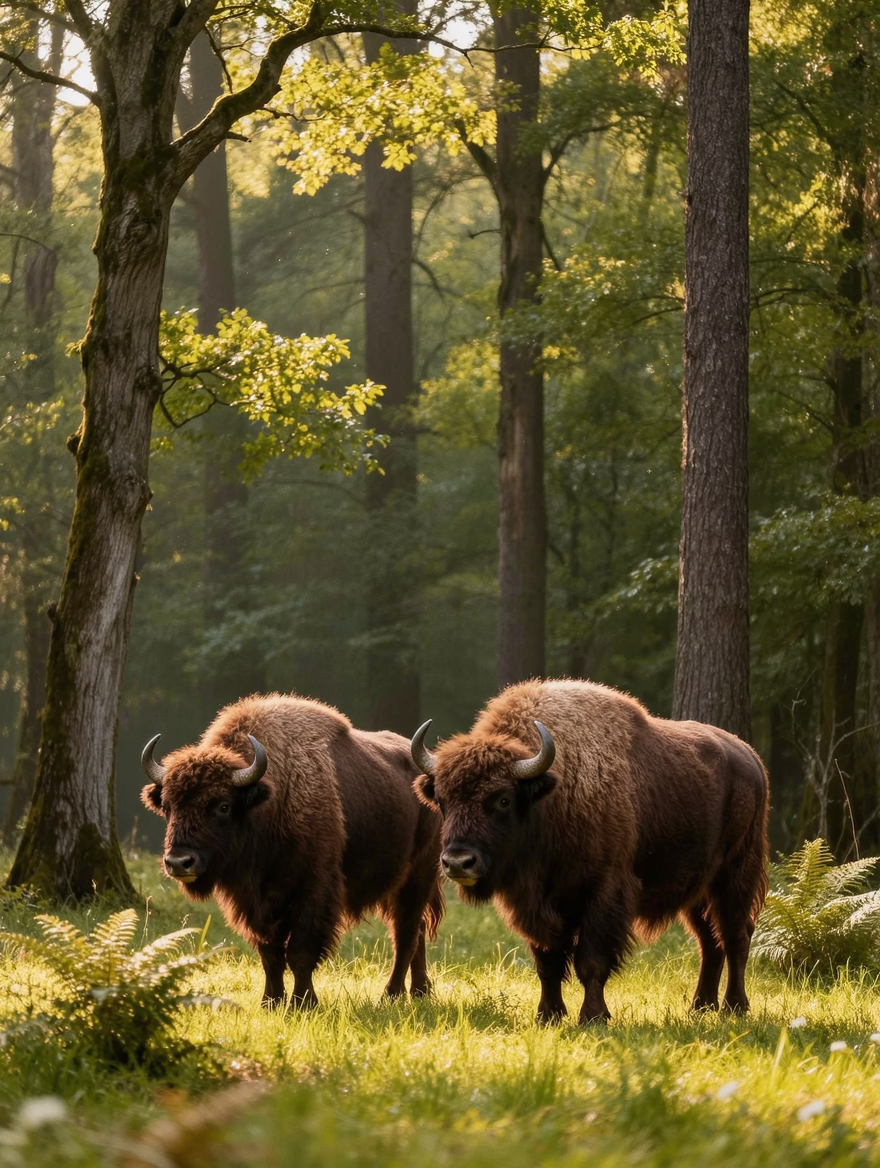
At the heart of this extraordinary ecosystem lives the continent’s heaviest land animal—the European bison, also known as the wisent. Once extinct in the wild, this majestic species has made a remarkable comeback thanks to careful conservation efforts, and the Białowieża Forest is now one of the best places in the world to observe them in their natural habitat.
A Primeval Forest Frozen in Time
The Białowieża Forest is often called a “natural time capsule.” Towering oak, spruce, and hornbeam trees form dense canopies that have stood for centuries. Dead wood is left to decay naturally, supporting thousands of fungi, insects, and microorganisms that sustain the forest’s biodiversity.
Unlike most European forests, logging and large-scale human development have been strictly limited in core protected zones. This allows researchers and visitors to witness ecological processes as they might have appeared in prehistoric Europe.
The Return of the European Bison
The European bison is the symbol of conservation success in the region. By the early 20th century, the species had completely disappeared from the wild due to hunting and habitat loss. The only remaining individuals survived in captivity, from which reintroduction programs began.
Today, Białowieża Forest hosts one of the most important free-roaming populations of European bison. These animals live in herds, moving through forest clearings, feeding on grasses, bark, and leaves. Despite their massive size—adult males can exceed 900 kilograms—they are generally shy and avoid human contact.
Spotting a bison in the wild is considered a rare and unforgettable experience, often requiring early morning excursions or guided tours with local naturalists.
Biodiversity Beyond the Bison
While the European bison is the star attraction, the forest is also home to wolves, lynx, wild boar, and hundreds of bird species. It is one of the most biologically rich ecosystems in Europe, with a complex food web that remains largely intact.
Ancient trees provide nesting sites for endangered woodpeckers, while wetlands support amphibians and rare plant species. This diversity makes the forest a crucial research site for understanding natural forest dynamics.
Visiting the Forest Responsibly
Tourism in Białowieża Forest is carefully managed to protect its fragile ecosystem. Visitors are encouraged to use guided tours, stick to designated trails, and respect wildlife distance rules. The nearby village of Białowieża offers museums, educational centers, and entry points for forest excursions.
Sustainable tourism helps fund conservation efforts while ensuring that future generations can experience this unique environment.
Why Białowieża Matters
In a rapidly changing world, Białowieża Forest represents one of the last strongholds of Europe’s original wilderness. It is not only a sanctuary for the European bison but also a reminder of what much of the continent once looked like before industrial expansion.
Protecting this forest means preserving an irreplaceable part of natural heritage—where ancient trees, wild animals, and ecological processes continue to thrive together.