Poland is a country where tradition is deeply woven into everyday life. From centuries-old religious celebrations to vibrant summer festivals, the calendar is filled with events that transform cities, villages, and historic squares into lively cultural spaces. Whether in bustling Warsaw or the historic streets of Kraków, festivals in Poland are not just events—they are shared experiences that connect generations.
Christmas (Boże Narodzenie) – A Time of Warm Traditions
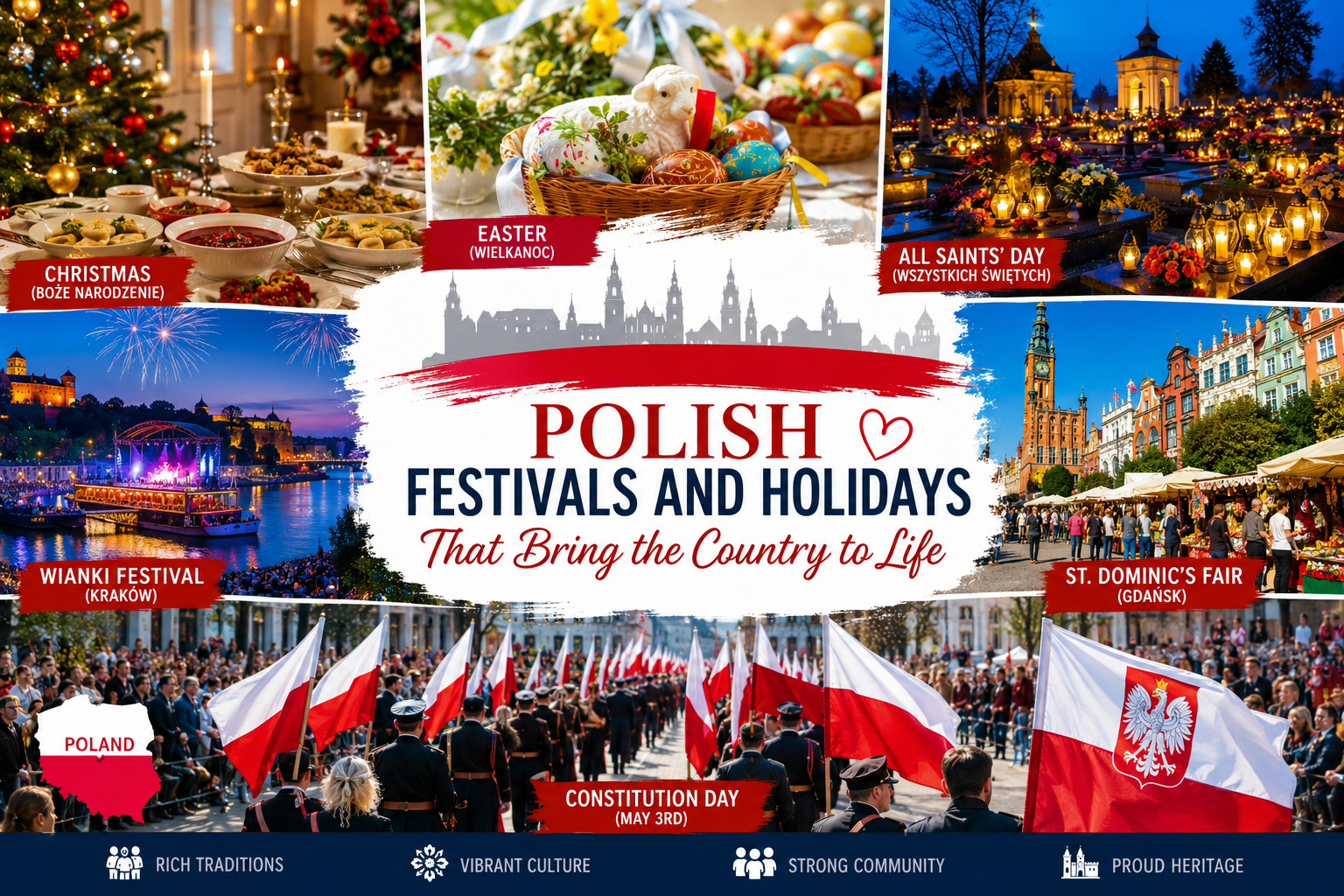
Christmas in Poland is one of the most cherished holidays. Known locally as Wigilia (Christmas Eve), it is celebrated with a festive dinner that begins after the first star appears in the sky.
Families gather for a meatless meal featuring dishes like beet soup (barszcz), dumplings (pierogi), and carp. An empty plate is often left at the table to symbolize hospitality for an unexpected guest.
The holiday season also includes carol singing and nativity scenes (szopki), especially famous in Kraków.
Easter (Wielkanoc) – Renewal and Symbolism
Easter in Poland is both religious and cultural, marking the arrival of spring and new life. The celebrations begin with Święconka, where families bring decorated baskets of food to church to be blessed.
On Easter Monday, the playful tradition of Śmigus-Dyngus (Wet Monday) takes over, where people sprinkle water on each other—a joyful custom symbolizing purification and renewal.
All Saints’ Day (Wszystkich Świętych) – A Night of Light and Memory
One of the most emotional observances in Poland is All Saints’ Day on November 1st. Cemeteries across the country glow with thousands of candles as families honor departed loved ones.
Cities like Warsaw and Kraków become especially atmospheric, with illuminated graves creating a quiet, reflective beauty. This day reflects the strong cultural importance of memory and family ties in Polish society.
Wianki Festival – Summer on the Vistula
The Wianki Festival is one of Poland’s most popular summer celebrations, held along the Vistula River in Kraków. Rooted in ancient Slavic midsummer traditions, it features live music, fireworks, and the symbolic floating of flower wreaths on water.
Modern editions of the festival blend tradition with contemporary concerts, attracting both locals and international visitors.
St. Dominic’s Fair – A Historic Market Celebration
Held annually in Gdańsk, the St. Dominic’s Fair is one of Europe’s oldest trade and cultural festivals, dating back to the 13th century.
Today, it transforms the city into a vast open-air market filled with antiques, handmade crafts, food stalls, and cultural performances. It is a vibrant mix of commerce, history, and entertainment.
Constitution Day (May 3rd) – National Pride
Poland’s Constitution Day on May 3rd commemorates the adoption of one of the world’s first modern constitutions in 1791. It is celebrated with parades, patriotic events, and official ceremonies across the country.
The day is especially significant in Warsaw, where national pride is expressed through public gatherings and cultural programs.
Conclusion
Polish festivals and holidays reflect the country’s deep cultural roots, strong sense of community, and love for tradition. Whether religious, historical, or seasonal, each celebration adds color and meaning to life in Poland. From winter candlelight to summer music by the river, these moments bring the nation together in unforgettable ways.