The concept of smart homes has evolved rapidly over the past decade, transforming from a futuristic idea into an everyday reality. Powered by the Internet of Things (IoT), smart homes integrate connected devices that communicate with each other to improve convenience, efficiency, and security. From voice-controlled assistants to intelligent thermostats, IoT devices are redefining how we live, work, and interact with our surroundings. As technology continues to advance, the adoption of smart home systems is accelerating across the globe.
What Are Smart Homes and IoT Devices?
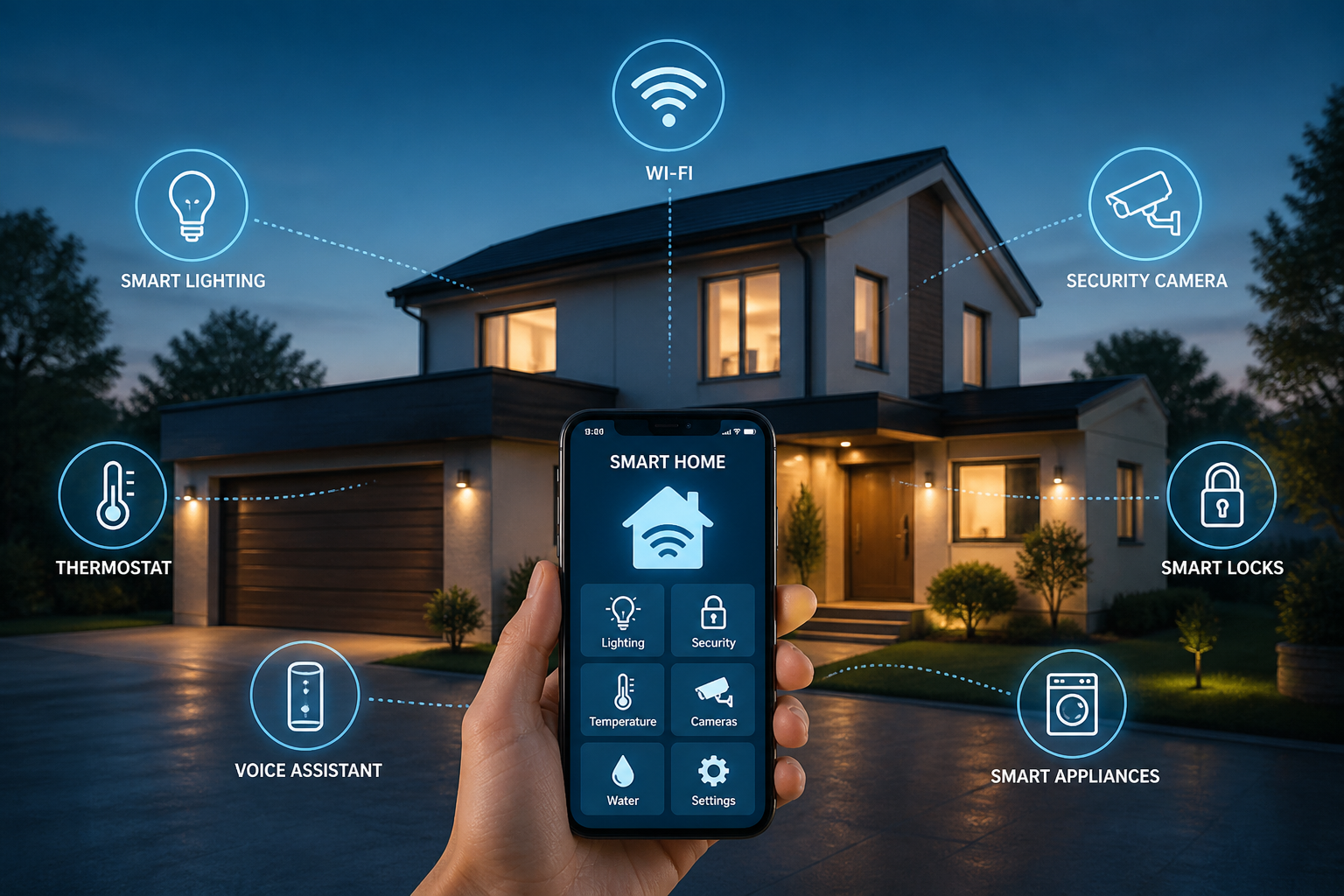
A smart home refers to a living space equipped with devices that can be controlled remotely via the internet. These devices are part of the broader IoT ecosystem, where everyday objects are embedded with sensors, software, and connectivity to exchange data. Common examples include smart lighting systems, smart TVs, connected refrigerators, and home security systems.
IoT devices operate through centralized platforms or mobile apps, allowing users to automate tasks and monitor their homes in real time. For instance, a smart thermostat can learn a user’s preferences and adjust the temperature accordingly, while smart locks provide keyless entry and enhanced security. This seamless integration of devices creates a more responsive and intelligent living environment.
Benefits of Smart Home Technology
One of the primary advantages of smart homes is convenience. With automation, users can control multiple devices with a single command or schedule tasks in advance. Imagine waking up to lights gradually turning on, coffee brewing automatically, and your favorite music playing—all without manual effort.
Energy efficiency is another major benefit. Smart devices help reduce energy consumption by optimizing usage patterns. For example, smart lighting systems can turn off when no one is in the room, and smart thermostats can adjust heating and cooling based on occupancy. This not only lowers utility bills but also contributes to environmental sustainability.
Security is significantly enhanced through smart home technology. Devices such as smart cameras, motion detectors, and doorbell cameras provide real-time monitoring and alerts. Homeowners can check live footage, receive notifications of suspicious activity, and even communicate with visitors remotely. This level of control offers peace of mind, whether at home or away.
Challenges and Concerns
Despite the many benefits, the rise of smart homes also brings certain challenges. One of the biggest concerns is data privacy. IoT devices collect vast amounts of personal data, which can be vulnerable to hacking or misuse if not properly secured. Ensuring strong encryption and secure networks is essential to protect user information.
Another challenge is compatibility. With numerous manufacturers producing IoT devices, not all products work seamlessly together. This can create difficulties when trying to build a fully integrated smart home system. However, industry standards and improved interoperability are gradually addressing this issue.
Cost can also be a barrier for some users. While prices are decreasing, setting up a complete smart home system can still require a significant investment. Additionally, reliance on internet connectivity means that system functionality may be affected during outages.
The Future of Smart Homes
The future of smart homes looks promising, with continuous advancements in artificial intelligence and machine learning. These technologies will enable devices to become even more intuitive, predicting user needs and adapting automatically. Voice assistants are expected to become more conversational and capable, further simplifying user interaction.
Integration with smart cities is another exciting development. Smart homes will connect with urban infrastructure, enabling better energy management, traffic optimization, and resource distribution. For example, homes could automatically adjust energy usage based on grid demand, contributing to a more sustainable environment.
Moreover, the expansion of 5G networks will enhance the performance of IoT devices by providing faster and more reliable connectivity. This will support the growth of more complex and data-intensive applications, making smart homes even smarter.
Conclusion
The rise of smart homes and IoT devices marks a significant shift in how people interact with their living spaces. By offering convenience, energy efficiency, and enhanced security, these technologies are transforming everyday life. While challenges such as privacy concerns and compatibility issues remain, ongoing innovations are steadily addressing these obstacles. As technology continues to evolve, smart homes will become more accessible, intelligent, and integrated into our daily routines. Ultimately, the future of living lies in connected environments that adapt to our needs, making life simpler, safer, and more efficient.