

Introduction
Artificial Intelligence has rapidly evolved over the last decade, transforming industries through chatbots, virtual assistants, recommendation engines, and content-generation tools. However, a new wave of innovation is beginning to reshape the future of AI: Physical AI and Robotics.
Unlike traditional AI systems that operate primarily in digital environments, Physical AI combines advanced machine learning with robotics, enabling intelligent machines to interact directly with the physical world. From manufacturing plants and warehouses to hospitals and logistics centers, AI-powered robots are becoming increasingly capable of performing complex tasks with minimal human intervention.
Industry leaders including NVIDIA, Tesla, Figure AI, Boston Dynamics, and Agility Robotics are investing billions of dollars to develop robots capable of understanding, reasoning, and acting in real-world environments.
As organizations seek greater efficiency, safety, and productivity, Physical AI is emerging as one of the most transformative technology trends of 2026.
What Is Physical AI?
Physical AI refers to artificial intelligence systems that can perceive, understand, and interact with the physical environment through robotic platforms.
Traditional AI applications often process text, images, or data in virtual environments. Physical AI extends these capabilities by enabling machines to:
- Observe surroundings through cameras and sensors
- Understand spatial environments
- Make decisions in real time
- Manipulate objects
- Navigate complex spaces
- Learn from physical interactions
In essence, Physical AI gives robots a form of situational awareness that allows them to function autonomously in dynamic environments.
For example, a warehouse robot equipped with Physical AI can identify packages, determine the most efficient route, avoid obstacles, and deliver goods without direct human guidance.
Why Physical AI Is Becoming a Major Trend
Advances in Foundation Models
The success of large language models has inspired researchers to build similar foundational AI systems for robotics.
These models are trained on vast datasets that include:
- Images
- Videos
- Sensor data
- Human demonstrations
- Robotic interactions
Instead of understanding language alone, these systems learn how physical actions relate to real-world outcomes.
As a result, robots can perform tasks they were never explicitly programmed to complete.
Improved Computing Power
Modern AI chips have dramatically increased processing capabilities.
Specialized hardware enables robots to:
- Analyze sensor data instantly
- Run sophisticated neural networks
- Make decisions in milliseconds
- Operate continuously in demanding environments
This computational progress is accelerating the deployment of intelligent robots across industries.
Labor Shortages and Automation Demand
Many industries face persistent labor shortages.
Organizations are increasingly turning to robotic solutions to:
- Fill workforce gaps
- Reduce repetitive manual labor
- Improve operational efficiency
- Lower long-term costs
Physical AI offers a scalable way to address these challenges while maintaining productivity.
Physical AI in Manufacturing


Manufacturing remains one of the largest adopters of robotics.
Traditional industrial robots have long performed repetitive tasks such as welding and assembly. However, Physical AI enables a new generation of adaptive robots capable of handling greater complexity.
Key Applications
Smart Assembly
AI-powered robots can assemble products with greater precision while adapting to variations in components.
Quality Inspection
Computer vision systems can identify defects that might be missed by human inspectors.
Predictive Maintenance
Robots and AI systems can monitor machinery and predict failures before they occur.
Collaborative Robotics
Modern robots can safely work alongside humans, sharing tasks and improving productivity.
As factories become increasingly automated, Physical AI is expected to drive the next generation of industrial innovation.
Transforming Warehouses and Logistics
Warehouse automation has become a critical focus for retailers, manufacturers, and logistics providers.
Physical AI allows robots to perform a variety of tasks that were previously difficult to automate.
Inventory Management
Robots can:
- Scan inventory
- Track stock levels
- Locate products
- Update databases automatically
Autonomous Picking and Packing
Advanced robotic systems can identify and handle objects of different shapes and sizes.
Route Optimization
AI continuously calculates the most efficient paths for moving goods throughout a facility.
Last-Mile Delivery
Autonomous delivery robots and vehicles are beginning to streamline deliveries in urban and suburban environments.
These innovations reduce costs while increasing speed and accuracy.
Healthcare Robotics: A Growing Frontier


Healthcare is emerging as one of the most promising areas for Physical AI.
AI-powered robotic systems are helping medical professionals improve patient care and operational efficiency.
Surgical Assistance
Robotic systems provide enhanced precision during complex procedures.
Patient Support
Robots can assist patients with mobility, medication reminders, and routine care.
Hospital Logistics
Autonomous robots transport:
- Medical supplies
- Laboratory samples
- Pharmaceuticals
- Equipment
Elderly Care
As populations age worldwide, robotic assistants may help seniors maintain independence while reducing pressure on healthcare systems.
The integration of AI and robotics has the potential to significantly improve healthcare accessibility and outcomes.
The Rise of Humanoid Robots
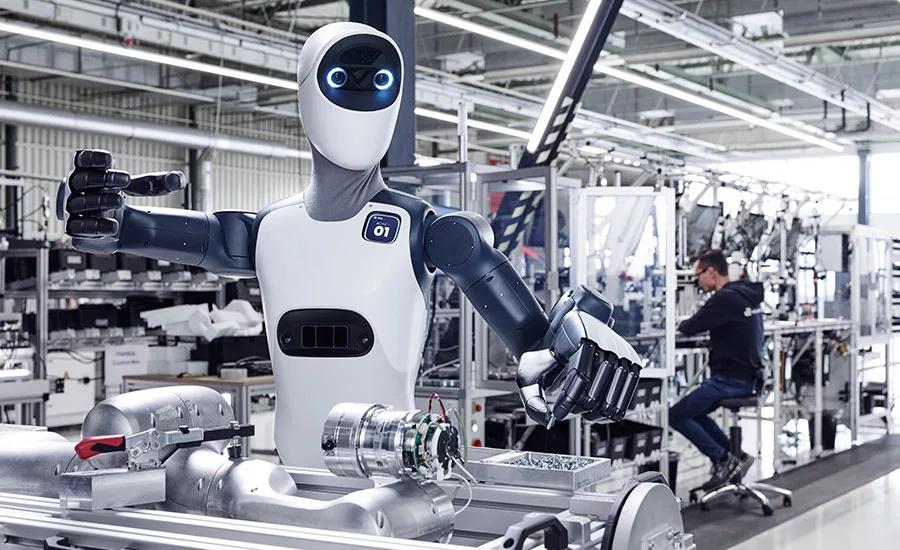
One of the most exciting developments in Physical AI is the emergence of humanoid robots.
Unlike specialized industrial machines, humanoid robots are designed to operate in environments built for humans.
Advantages of Human-Like Design
Humanoid robots can:
- Use existing tools
- Navigate standard buildings
- Open doors
- Climb stairs
- Handle objects designed for people
This flexibility could make them valuable across numerous industries.
Potential Applications
- Manufacturing
- Warehousing
- Retail
- Hospitality
- Healthcare
- Construction
Several companies are racing to commercialize humanoid robots capable of performing economically valuable work at scale.
AI Models Built Specifically for Robots
A significant shift is occurring in AI development.
Instead of adapting language models for robotics, researchers are creating AI systems specifically designed for physical interaction.
These models focus on:
Spatial Understanding
Robots must understand three-dimensional environments rather than simply processing text.
Motion Planning
Physical AI determines how actions should be executed safely and efficiently.
Sensor Fusion
Data from cameras, lidar, microphones, and other sensors are combined to create a comprehensive understanding of surroundings.
Continuous Learning
Robots improve performance through experience and feedback.
These capabilities are laying the foundation for increasingly autonomous machines.
Challenges Facing Physical AI
Despite rapid progress, significant challenges remain.
Safety
Robots operating near humans must meet strict safety standards.
Reliability
Systems must function consistently under varying conditions.
Cost
Advanced robotic platforms remain expensive for many organizations.
Regulatory Frameworks
Governments are still developing policies regarding autonomous systems.
Ethical Considerations
Questions remain regarding:
- Employment impacts
- Accountability
- Privacy
- Human oversight
Addressing these issues will be critical for widespread adoption.
Economic Impact of Physical AI
The economic implications of Physical AI could be profound.
Potential benefits include:
- Increased productivity
- Lower operational costs
- Enhanced workplace safety
- Faster supply chains
- Improved service delivery
Entirely new industries and business models may emerge as intelligent robots become more capable and affordable.
Many analysts believe Physical AI could become one of the largest technology markets of the next decade, rivaling the impact of cloud computing and generative AI.
The Future of Intelligent Robotics
Over the coming years, Physical AI is expected to evolve rapidly.
Future developments may include:
- General-purpose robots
- Autonomous warehouses
- AI-driven factories
- Intelligent healthcare assistants
- Self-managing logistics networks
As AI systems become better at understanding and interacting with the physical world, the distinction between digital intelligence and physical action will continue to blur.
Organizations that successfully integrate Physical AI into their operations may gain significant competitive advantages in efficiency, scalability, and innovation.
Conclusion
Physical AI and robotics represent the next major frontier in artificial intelligence. While generative AI transformed how people interact with information, Physical AI is transforming how machines interact with the real world.
From factories and warehouses to hospitals and logistics networks, intelligent robots are becoming more capable, adaptable, and autonomous. Advances in robotics-specific AI models, powerful computing hardware, and real-world learning systems are accelerating adoption across industries.
Although challenges related to safety, regulation, and cost remain, the long-term trajectory is clear: AI is moving beyond screens and into the physical world. As this transformation unfolds, Physical AI could redefine productivity, reshape industries, and fundamentally change how humans and machines work together.
Tags: Physical AI, Robotics, Humanoid Robots, AI Automation, Smart Manufacturing, Warehouse Robotics, Healthcare Robots, Autonomous Systems, Industrial AI, Logistics Automation, Future of Robotics, Artificial Intelligence Trends, AI Innovation, Intelligent Machines, Enterprise Automation.